

Choosing the right scissor lift platform requires more than comparing prices. The machine must match the project’s working height, load requirements, ground conditions, operating environment, and transportation needs.
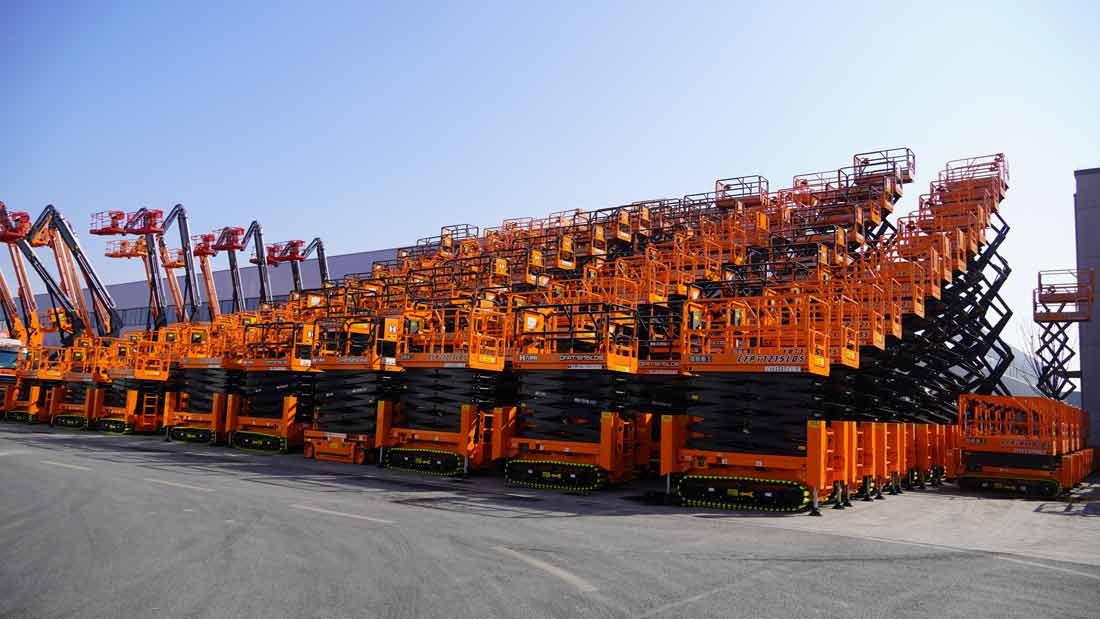
Manufacturers provide a wide range of specifications, and understanding these technical details can help buyers make a more informed decision. Whether the equipment will be used for construction, warehouse maintenance, industrial installation, or outdoor work, the right specifications can improve productivity and operational safety.
This buying guide explains the most important scissor lift platform specifications you should know before purchasing or renting equipment.
What Is a Scissor Lift Platform?
A scissor lift platform is an aerial work platform designed to raise workers, tools, and materials vertically. It uses crossed support arms to lift and lower a stable working platform.
Scissor lifts are available in different configurations, including electric, diesel, hydraulic, rough terrain, self-propelled, narrow, and trailer-mounted models.
Each type is designed for different working environments. A compact electric model may be suitable for indoor maintenance, while a rough terrain scissor lift platform may be better for outdoor construction sites.
1. Platform Height
Platform height is one of the first specifications to check. It refers to the distance from the ground to the floor of the working platform when fully raised.
The required platform height depends on the location of the work. For example, ceiling installation and indoor maintenance may require a lower platform height than building construction or structural installation.
Do not select a machine based only on its maximum height. Consider the actual height of the work surface and leave sufficient room for safe operation.
2. Working Height
Working height is usually greater than platform height because it includes the operator’s average reach above the platform.
For example, a machine with a platform height of 10 meters may have a working height of approximately 12 meters, depending on the manufacturer’s calculation method.
When comparing different models, check how each manufacturer defines working height. Using platform height and working height interchangeably can lead to choosing equipment that cannot safely reach the target area.
3. Rated Load Capacity
Rated load capacity refers to the maximum combined weight that the scissor lift platform can support. This includes:
Operators
Tools
Materials
Equipment
Personal protective equipment
Approved accessories
Before choosing a machine, calculate the heaviest expected load. The total weight should remain below the manufacturer’s rated capacity.
Some models may have separate load limits for the main platform and extension deck. Always check the load label and operating manual.
4. Platform Dimensions
Platform length and width determine how much working space is available. A larger platform can provide more room for workers, tools, and materials.
A compact platform may be more suitable for narrow aisles, small rooms, and restricted access areas. A larger platform may be better for construction and installation tasks involving multiple workers or large components.
Consider the following platform specifications:
Main platform length
Platform width
Extension deck length
Maximum number of workers
Platform load capacity
Folded platform dimensions
The platform should be large enough for the task without making the machine difficult to maneuver.
5. Overall Machine Dimensions
The overall width and length of a scissor lift platform affect site access and transportation.
Before selecting a machine, measure:
Doorways
Corridors
Warehouse aisles
Elevator entrances
Loading areas
Worksite gates
Turning spaces
A narrow scissor lift platform may be necessary for indoor work. Larger machines may offer greater capacity and stability but require more space for operation and storage.
6. Power Source
The power source affects operating costs, noise, emissions, and application suitability.
Electric Power
Electric scissor lift platforms are generally used indoors and on smooth surfaces. They operate quietly and produce no direct exhaust emissions.
They are suitable for warehouses, factories, shopping centers, offices, and indoor construction projects. Buyers should check battery capacity, charging time, operating duration, and battery replacement requirements.
Diesel Power
Diesel scissor lift platforms are often selected for outdoor and heavy-duty applications. They can provide strong performance on construction sites and rough terrain.
However, diesel machines produce exhaust emissions and more noise than electric models. They also require engine and fuel-system maintenance.
Hybrid Power
Hybrid models combine an engine with an electric system. They may be suitable for projects that require both outdoor mobility and quieter operation in selected work areas.
7. Drive System and Gradeability
The drive system determines how the machine moves around the worksite. Common features include two-wheel drive, four-wheel drive, self-propelled operation, and automatic braking.
For outdoor construction, four-wheel drive can provide better traction on uneven surfaces. Gradeability indicates the maximum slope the machine can travel under specified conditions.
Gradeability should not be confused with permission to operate on any slope. The worksite must still meet the manufacturer’s requirements for stability and surface conditions.
8. Ground Clearance and Tire Type
Ground clearance is especially important for outdoor work. A higher chassis may help the machine pass over small obstacles and uneven surfaces.
Tire type also affects performance:
Solid tires are often suitable for smooth indoor floors.
Non-marking tires help reduce floor marks in finished buildings.
Pneumatic tires may improve outdoor traction and comfort.
Heavy-duty off-road tires are designed for rough terrain.
Select tires according to the surface where the machine will operate. Indoor and outdoor applications may require completely different configurations.
9. Machine Weight
Machine weight affects transportation, floor loading, and site access. A heavier model may provide better stability and higher capacity, but it may require specialized transport equipment.
Before purchasing or renting, confirm:
Operating weight
Transport weight
Axle load
Floor load requirements
Loading and unloading method
Trailer or truck requirements
This is particularly important when the machine will be used in buildings, parking structures, elevators, or areas with limited floor capacity.
10. Travel Speed and Turning Radius
Travel speed affects how quickly the machine can move between work areas. A compact turning radius can improve maneuverability in narrow spaces.
For warehouse and indoor work, turning radius may be more important than maximum travel speed. For large construction sites, higher travel speed may reduce repositioning time.
Consider whether the machine will be driven while the platform is lowered or raised. Some models permit limited elevated travel, while others require the platform to be fully lowered before movement.
11. Safety Features
Safety features should be carefully reviewed before selecting a scissor lift platform. Common features include:
Guardrails
Safety gate
Emergency stop button
Emergency lowering system
Tilt alarm
Overload protection
Automatic braking
Pothole protection
Platform leveling system
Motion alarm
Stabilizers or outriggers
These features can help reduce risks, but they do not replace operator training, pre-use inspections, and proper worksite planning.
12. Wind Rating
Wind rating is an important specification for outdoor use. It indicates the maximum wind conditions under which the equipment is designed to operate.
Outdoor work involving panels, banners, signs, or other large materials may create additional wind exposure. Always follow the manufacturer’s wind limits and stop operation when conditions become unsafe.
Indoor-only models may have different wind ratings or may not be designed for outdoor operation at all.
13. Charging Time and Battery Capacity
For electric scissor lift platforms, battery specifications directly affect productivity.
Important battery details include:
Battery type
Battery voltage
Battery capacity
Full charging time
Expected operating time
Charger requirements
Battery replacement cost
For projects involving multiple shifts, buyers should plan charging schedules carefully. Additional batteries or fast-charging systems may be necessary to reduce downtime.
14. Hydraulic and Mechanical Specifications
Hydraulic components affect lifting smoothness, capacity, and reliability. Buyers should review the type of lifting system, hydraulic cylinder arrangement, emergency lowering function, and maintenance requirements.
Mechanical specifications may include:
Scissor arm design
Chassis structure
Axle type
Brake system
Steering method
Platform extension mechanism
Stabilizer configuration
A qualified equipment supplier can help explain how these specifications affect actual performance.
15. Control System
The control system determines how the operator drives and raises the machine. Most modern scissor lifts include platform controls and ground controls.
Important control features may include:
Proportional lifting and driving
Steering controls
Emergency stop buttons
Diagnostic display
Battery or fuel indicators
Warning alarms
Ground-level emergency controls
The controls should be easy to understand and clearly labeled. Operator training is required before using the equipment.
16. Maintenance and Service Support
A machine’s long-term value depends partly on its service support. Before buying or renting, check whether replacement parts, technicians, inspection services, and maintenance documentation are readily available.
Ask the supplier about:
Warranty coverage
Preventive maintenance
Service intervals
Spare parts availability
Battery or engine support
Emergency repair services
Operator training
Reliable service support can reduce downtime and help extend equipment lifespan.
Specification Comparison Table
The following specifications should be compared when evaluating different models:
| Specification | Why It Matters |
|---|---|
| Platform height | Determines the height of the working deck |
| Working height | Shows the approximate maximum operator reach |
| Load capacity | Determines how much weight the platform can support |
| Platform dimensions | Affects workspace and worker comfort |
| Machine width | Determines access through doors and aisles |
| Power source | Affects emissions, noise, and operating cost |
| Machine weight | Influences transportation and floor loading |
| Gradeability | Indicates slope travel capability |
| Ground clearance | Important for uneven outdoor surfaces |
| Tire type | Affects traction and floor protection |
| Wind rating | Defines safe outdoor operating conditions |
| Battery capacity | Affects electric operating time |
| Safety features | Helps support safe operation |
Common Buying Mistakes to Avoid
One common mistake is selecting a machine based only on maximum working height. A lift may reach the required height but lack sufficient load capacity or platform space.
Another mistake is choosing indoor equipment for outdoor work. Smooth-floor electric models may not be appropriate for gravel, mud, slopes, or unfinished ground.
Buyers should also avoid ignoring transportation requirements. The machine must be able to reach the worksite and fit through all necessary access points.
Finally, do not focus only on the initial purchase price. Operating costs, maintenance, energy consumption, spare parts, and service support all affect the total cost of ownership.
Conclusion
Selecting the right scissor lift platform requires careful evaluation of several specifications. Working height, load capacity, platform size, machine dimensions, power source, terrain capability, safety features, and maintenance support all play an important role.
Electric models are commonly used for quiet indoor work, while diesel and rough terrain machines are better suited to demanding outdoor applications. Compact models are ideal for restricted spaces, while larger machines can provide greater capacity and platform area.
By comparing the right specifications and matching the machine to the actual work environment, buyers can improve productivity, reduce operating costs, and support safer elevated work.
Frequently Asked Questions
What is the most important scissor lift specification?
Working height and rated load capacity are among the most important specifications. The machine must safely reach the work area and support the total weight of workers, tools, and materials.
What is the difference between platform height and working height?
Platform height is the height of the platform floor. Working height generally includes the operator’s reach above the platform and is therefore higher.
Which scissor lift platform is best for indoor use?
A compact electric scissor lift platform is usually suitable for indoor applications because it is quiet, maneuverable, and produces no direct exhaust emissions.
What specifications matter most for outdoor construction?
Ground clearance, tire type, gradeability, four-wheel drive, platform capacity, wind rating, and stabilization features are especially important for outdoor work.
Should I buy or rent a scissor lift platform?
Buying may be suitable for frequent long-term use. Renting may be more practical for short-term projects or occasional applications.